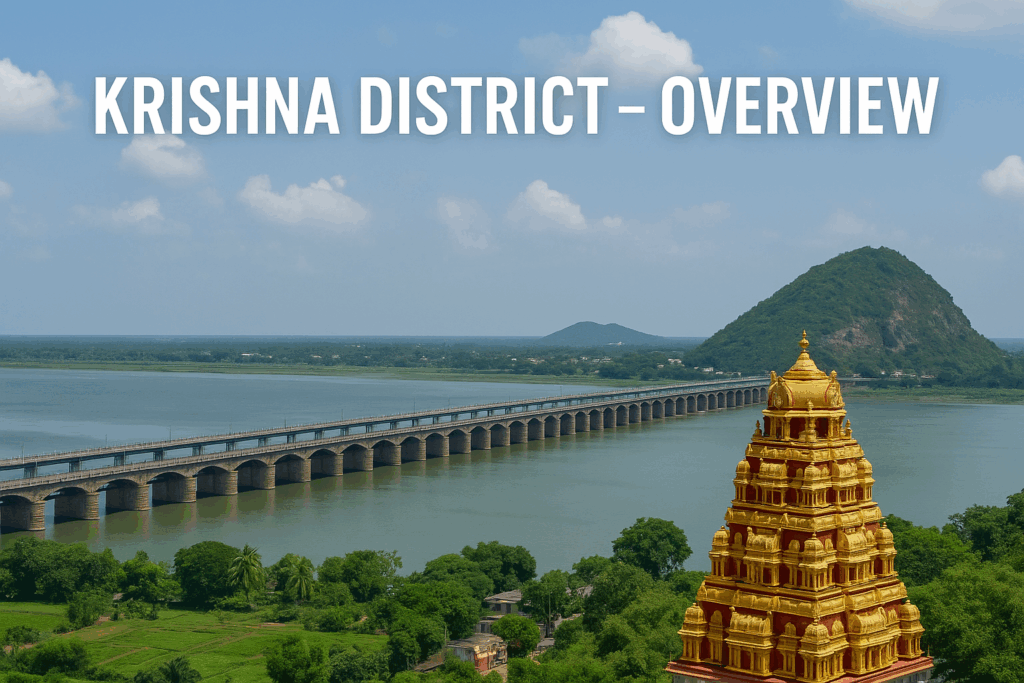
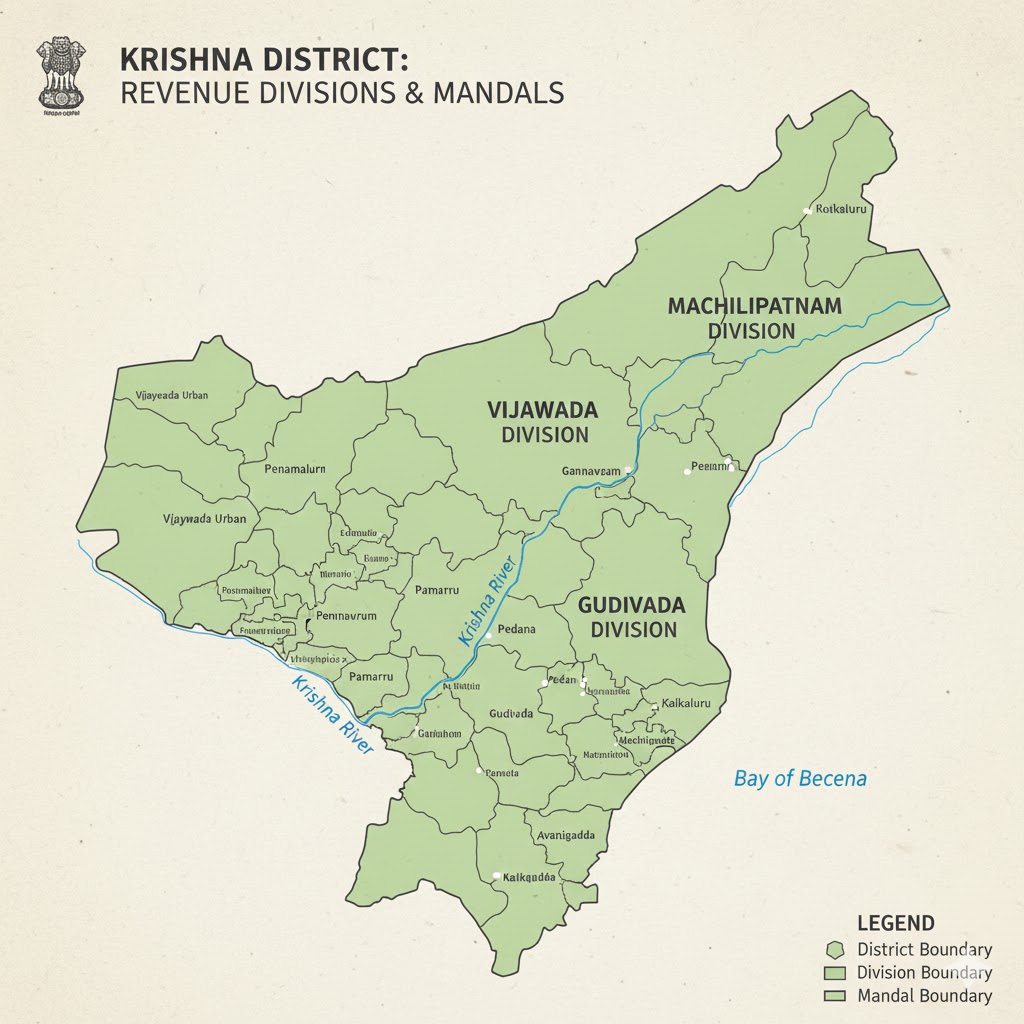
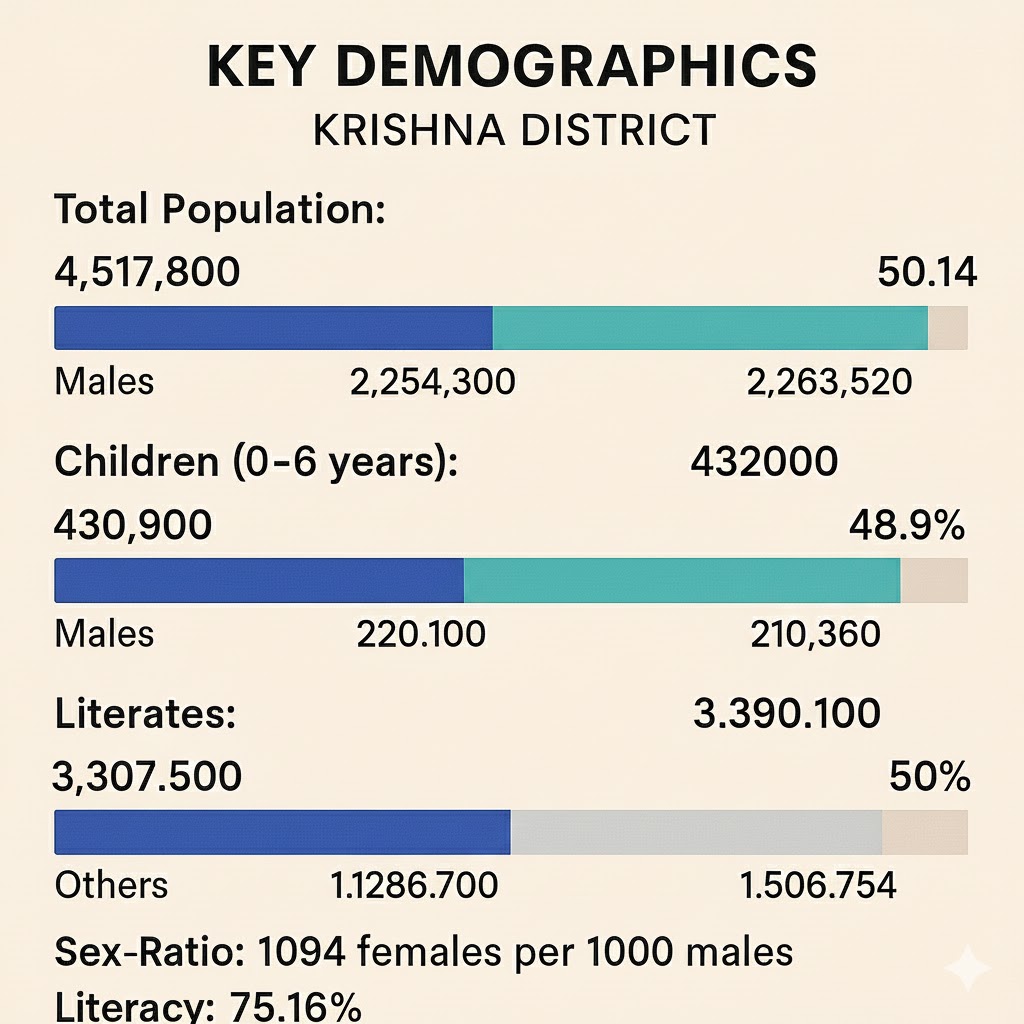
Krishna District is one of the most culturally rich and historically significant regions in the state of Andhra Pradesh. Known for its vibrant heritage, fertile agricultural lands, and thriving urban centers, the district holds a prominent place in the state’s economic and social development.
Named after the sacred Krishna River, the district is renowned for its picturesque landscapes, serene riverbanks, and flourishing farming communities. Vijayawada, the commercial capital of Andhra Pradesh, serves as the district’s major urban hub and is well-known for its educational institutions, business centers, and transportation connectivity.
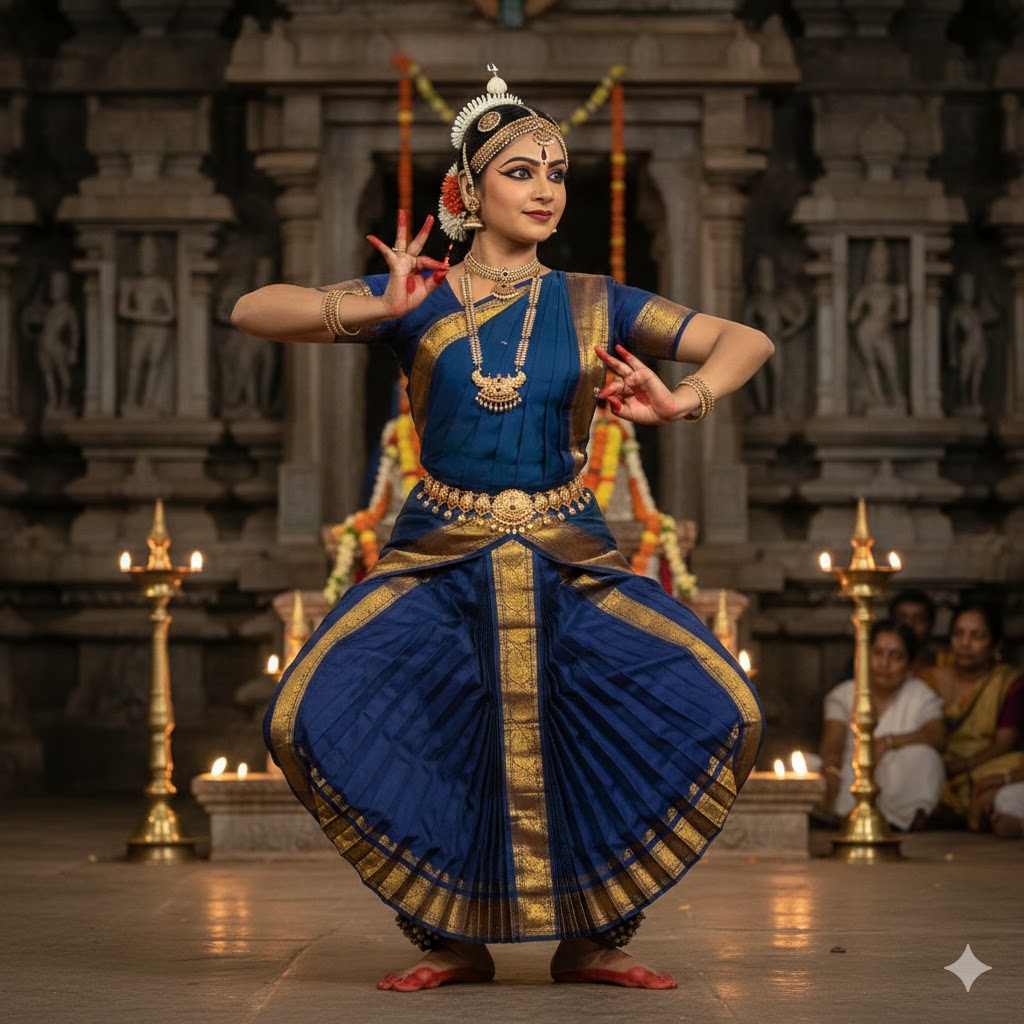
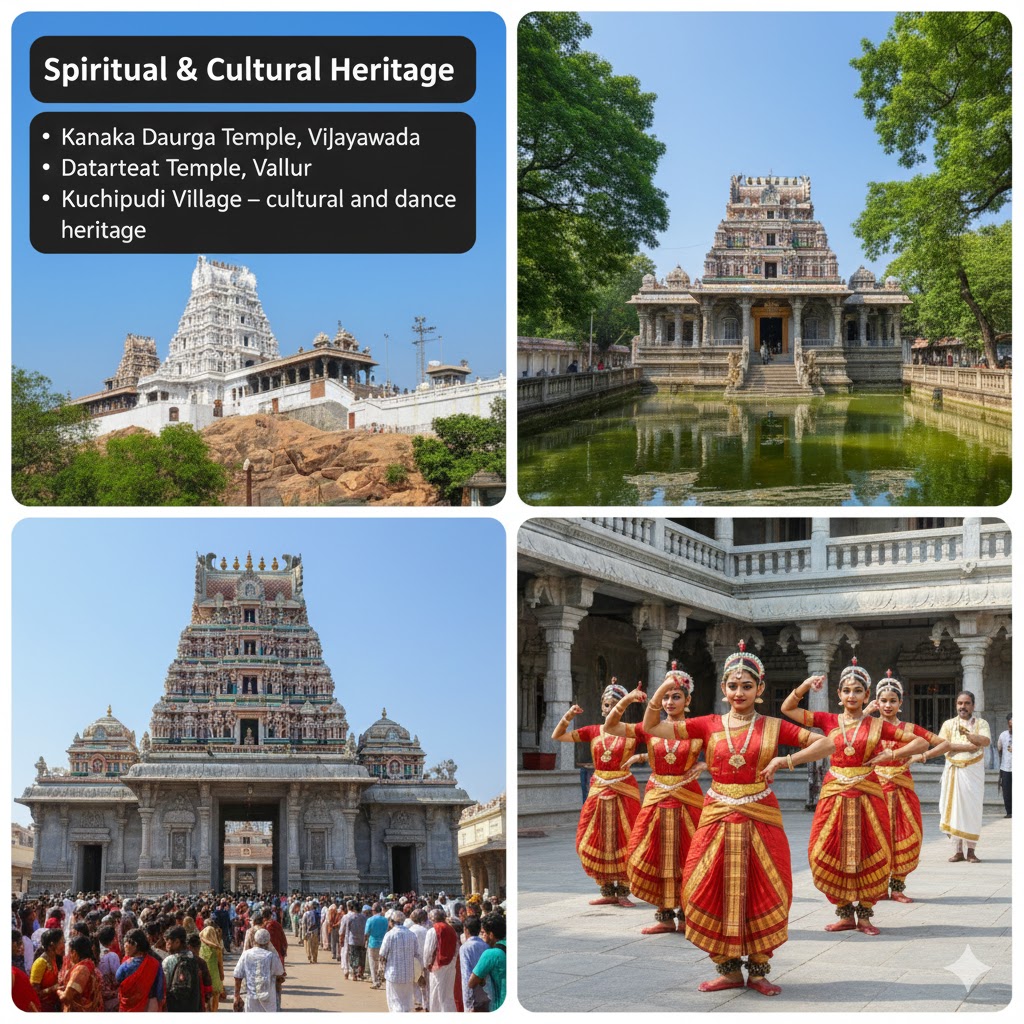
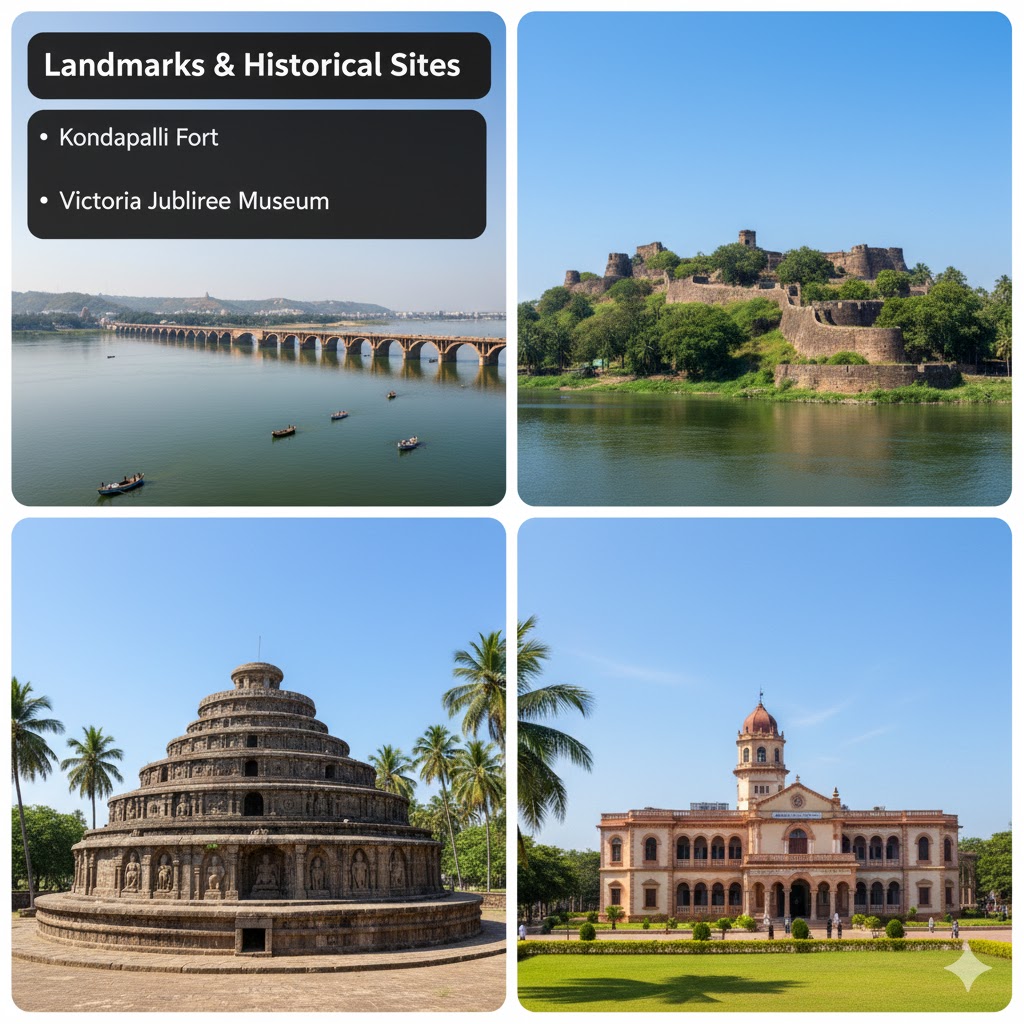
Krishna District is also a treasure of tradition, celebrated through classical arts, Kuchipudi dance, temples, and festivals. The famous Kuchipudi village, birthplace of the classical Kuchipudi dance form, is located here. The district is home to several iconic attractions such as Kanaka Durga Temple, Prakasam Barrage, Bhavani Island, and historically important Buddhist sites.
With rapid infrastructural growth, active tourism, rich agriculture, and strong cultural roots, Krishna District continues to be a dynamic blend of tradition and modernity.
Krishna District – Overview
Krishna District is one of the most culturally vibrant and economically significant regions of Andhra Pradesh. Located in the heart of Coastal Andhra, the district is named after the majestic Krishna River, which enriches its fertile lands and supports thriving agriculture, aquaculture, and rural livelihoods.
Home to the commercial hub Vijayawada, Krishna District blends modern infrastructure with deep-rooted tradition. With iconic landmarks like Prakasam Barrage, Kanaka Durga Temple, Bhavani Island, and the heritage-rich Kuchipudi village, the district stands as a symbol of culture, tourism, spirituality, and progress.
Geography & Location
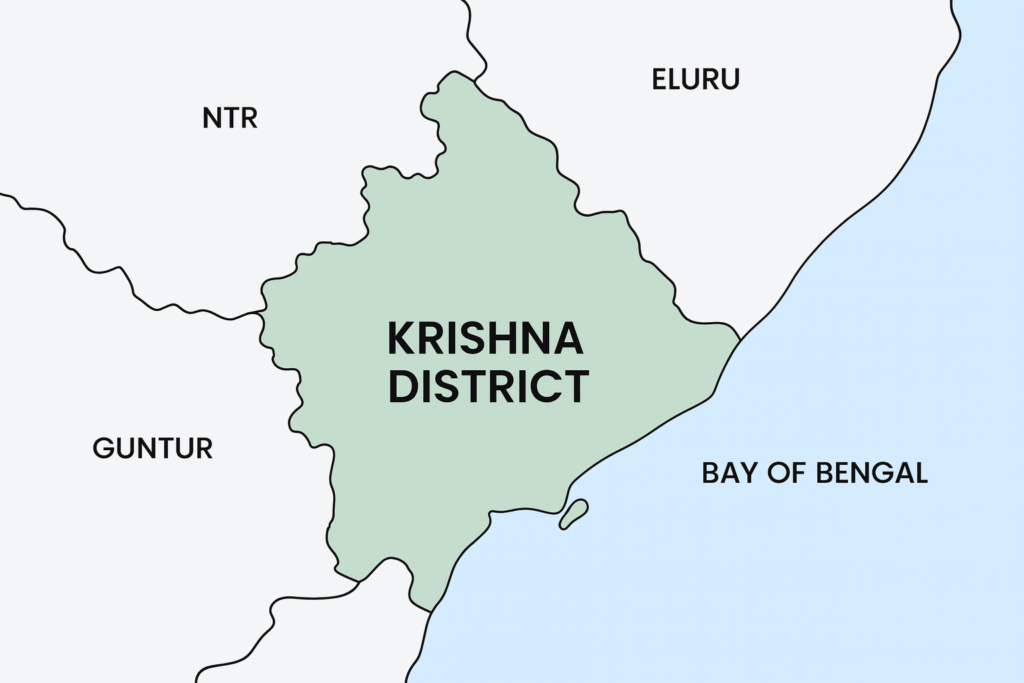
Krishna District lies in the Coastal Andhra region and is bordered by:
NTR District in the northwest
Guntur District in the southwest
Eluru District in the east
The Bay of Bengal to the southeast
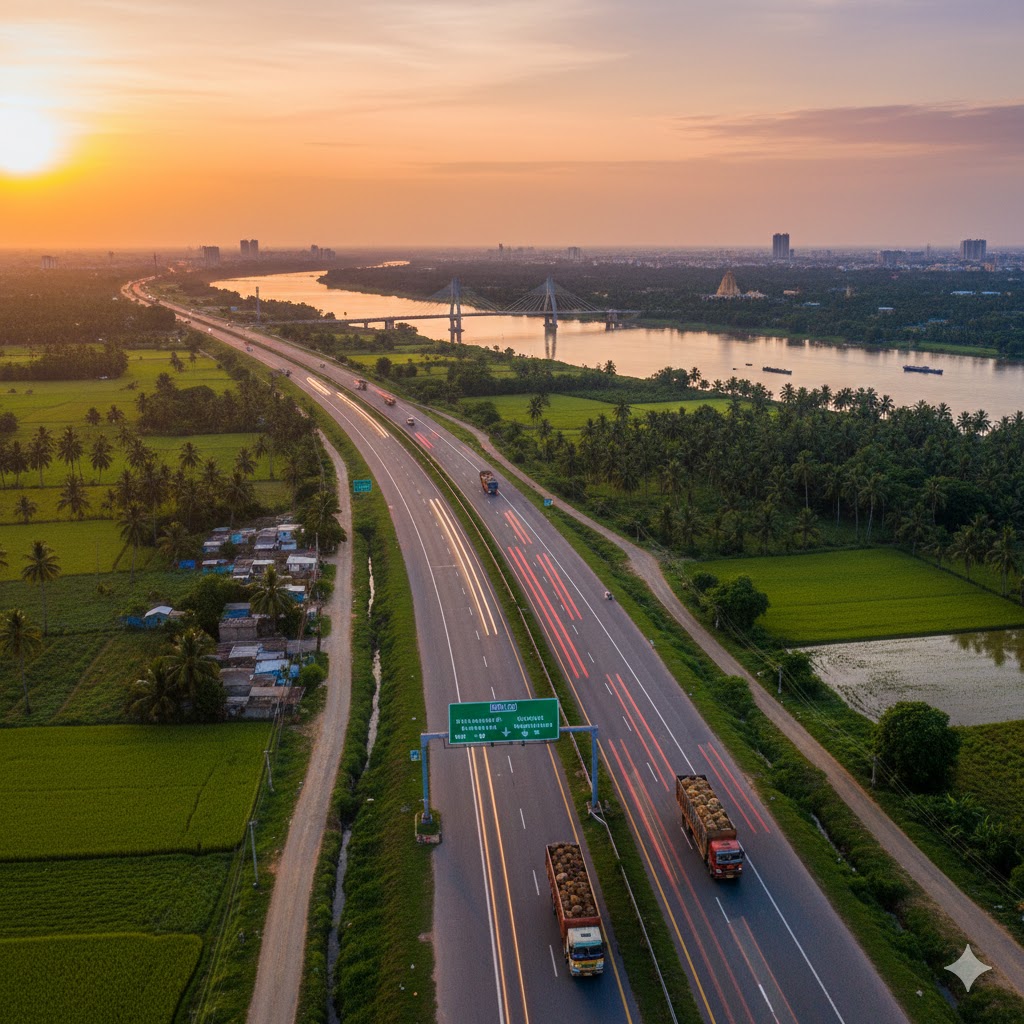
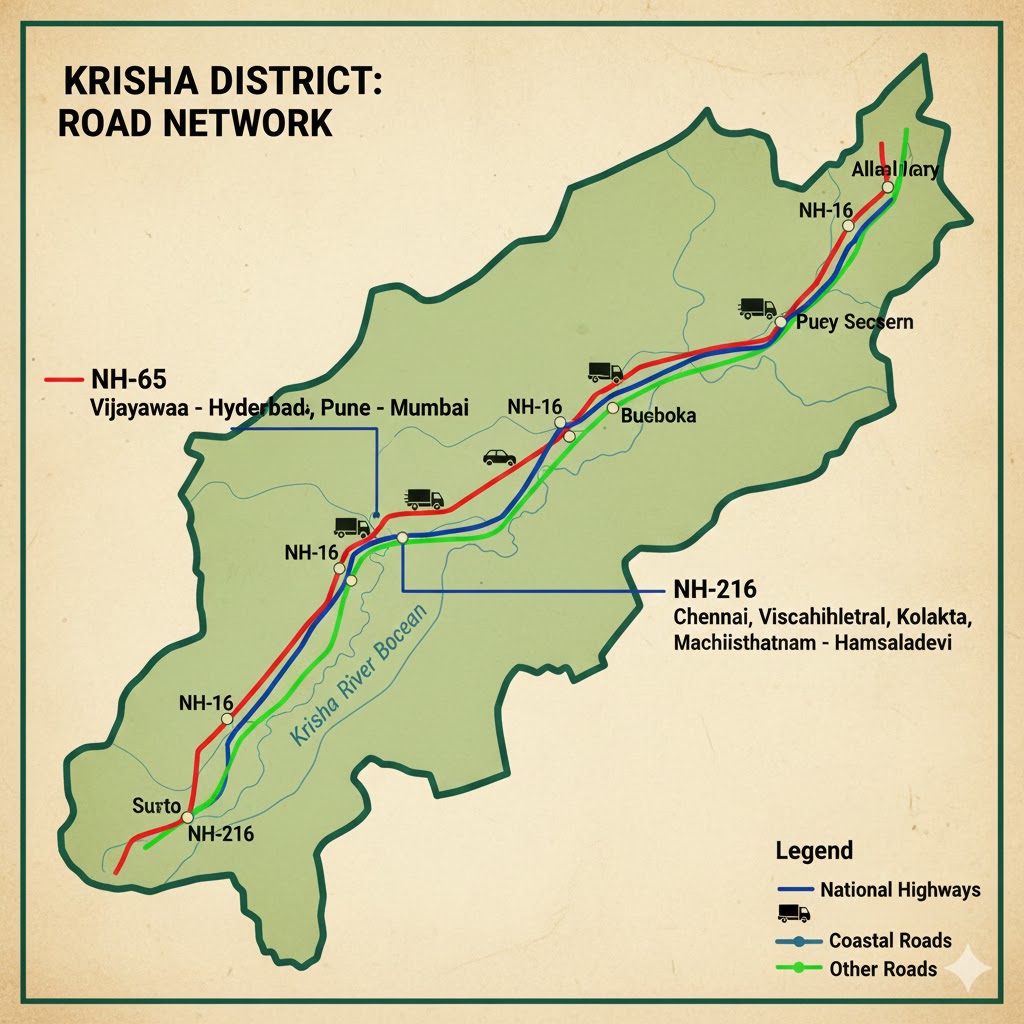
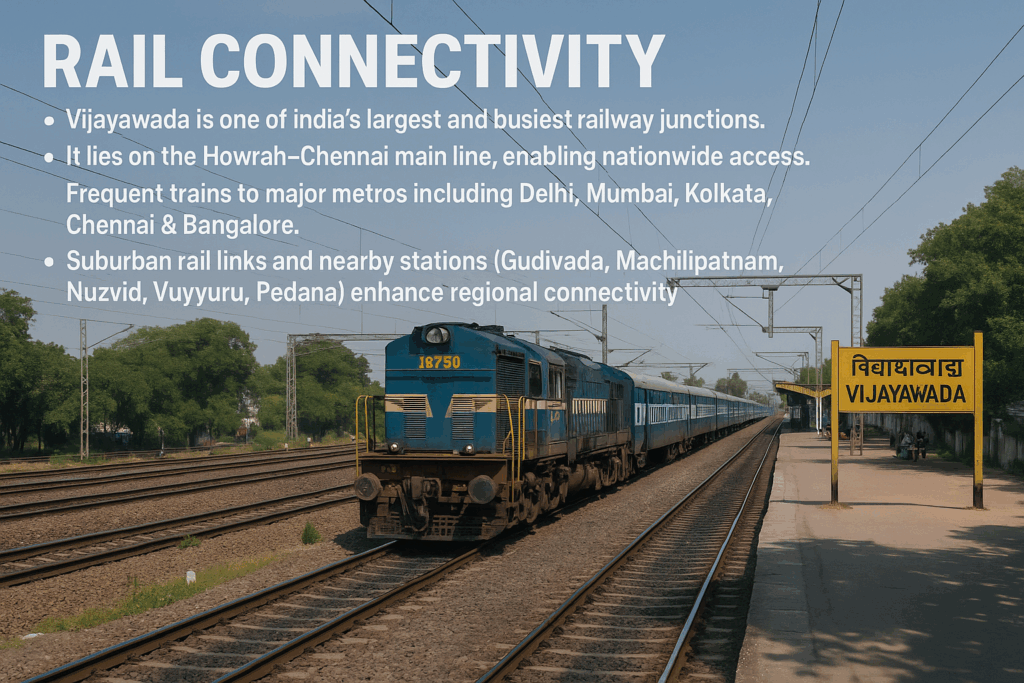
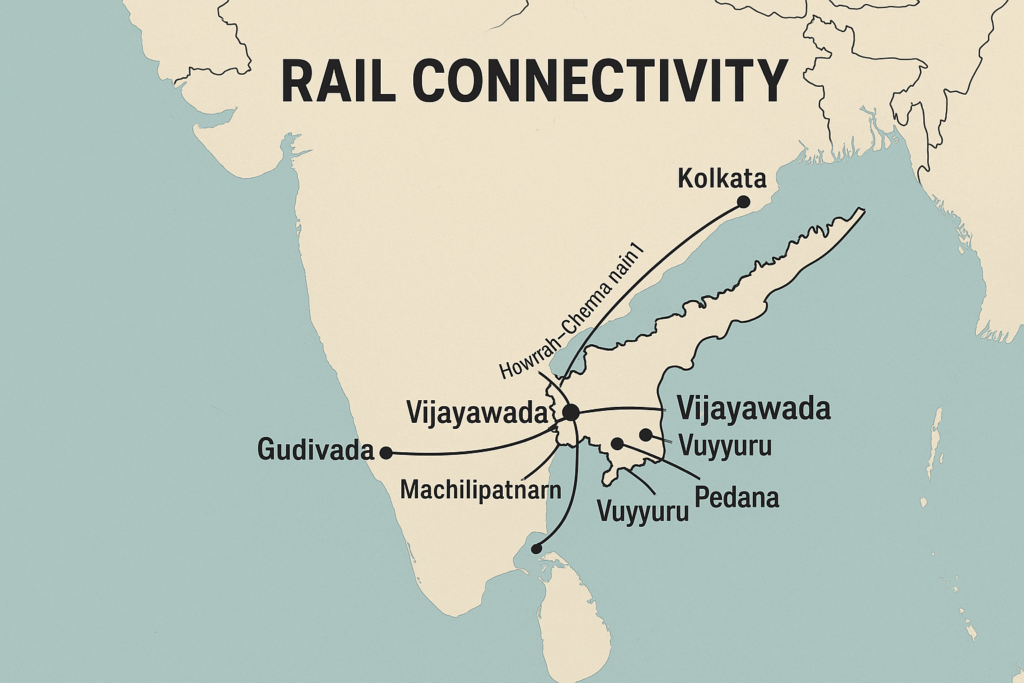
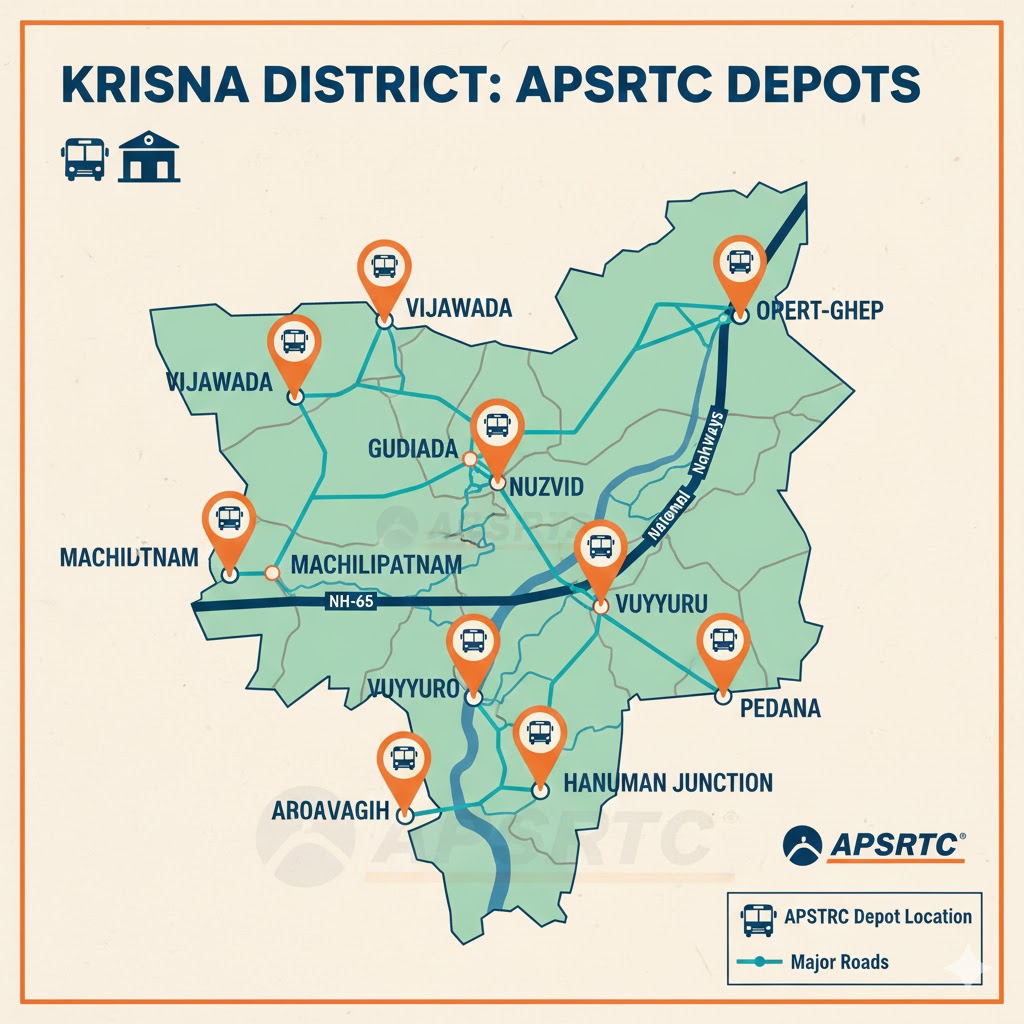
The district enjoys a mix of coastal plains, rich agricultural fields, river deltas, and urban landscapes. Its well-developed road and rail networks make it one of the most accessible regions in the state.
History & Cultural Heritage
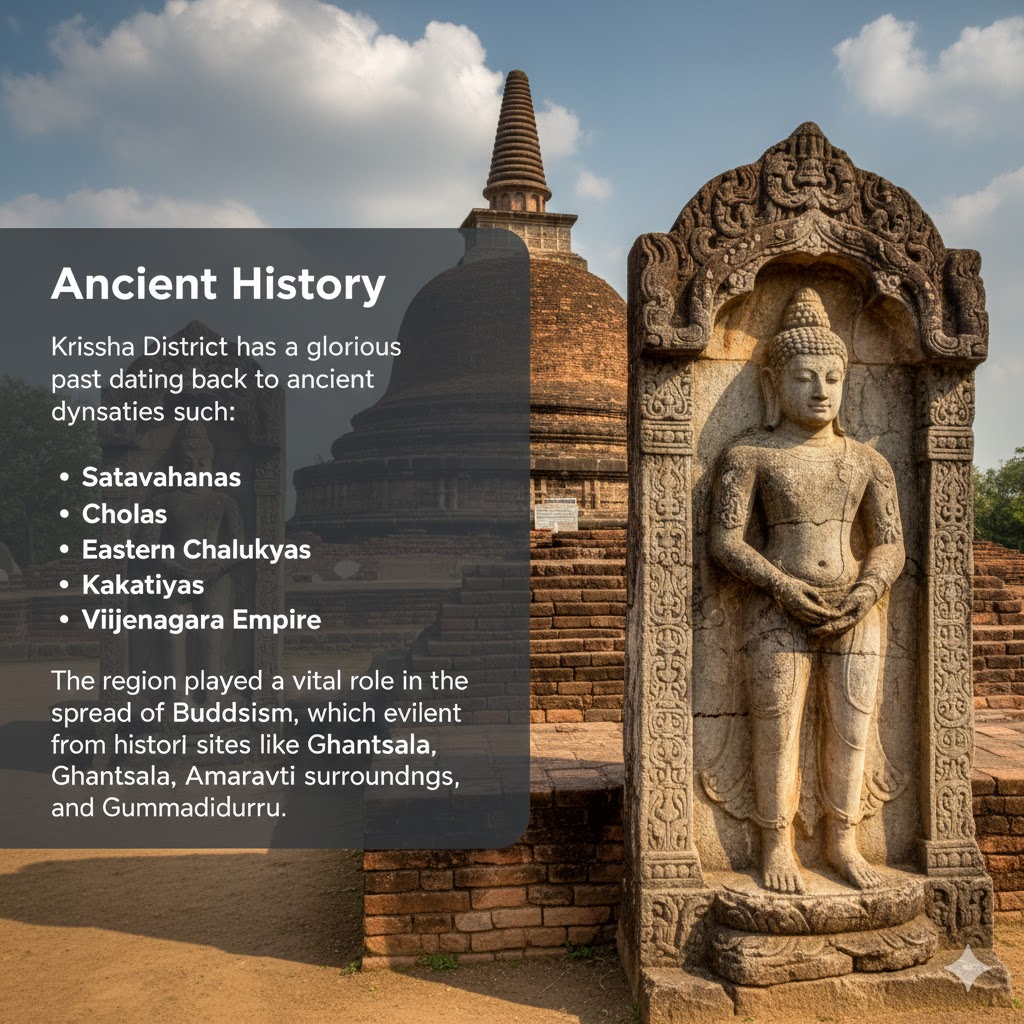
Krishna District is one of the oldest cultural regions in Andhra Pradesh, known for its rich history, ancient settlements, and vibrant artistic traditions. The district has been shaped by influential dynasties such as the Satavahanas, Eastern Chalukyas, Kakatiyas, and Vijayanagara rulers, each contributing to its architectural, literary, and cultural evolution.
The region played a major role in the growth of Buddhism, with significant archaeological sites like Ghantasala, Gummadidurru, and Jaggayyapeta showcasing stupas, sculptures, and inscriptions. Machilipatnam’s historic port strengthened maritime trade with the Dutch, British, and other global merchants, making it a major center for textiles, spices, and Kalamkari art.
Krishna District is also the proud birthplace of the classical dance form Kuchipudi, renowned worldwide for its graceful expressions and storytelling tradition. The district’s cultural landscape is enriched by iconic temples like Kanaka Durga Temple and numerous village festivals, folk arts, and literary contributions that celebrate the depth of Telugu heritage.
🌾 Agriculture – The Backbone of Krishna District
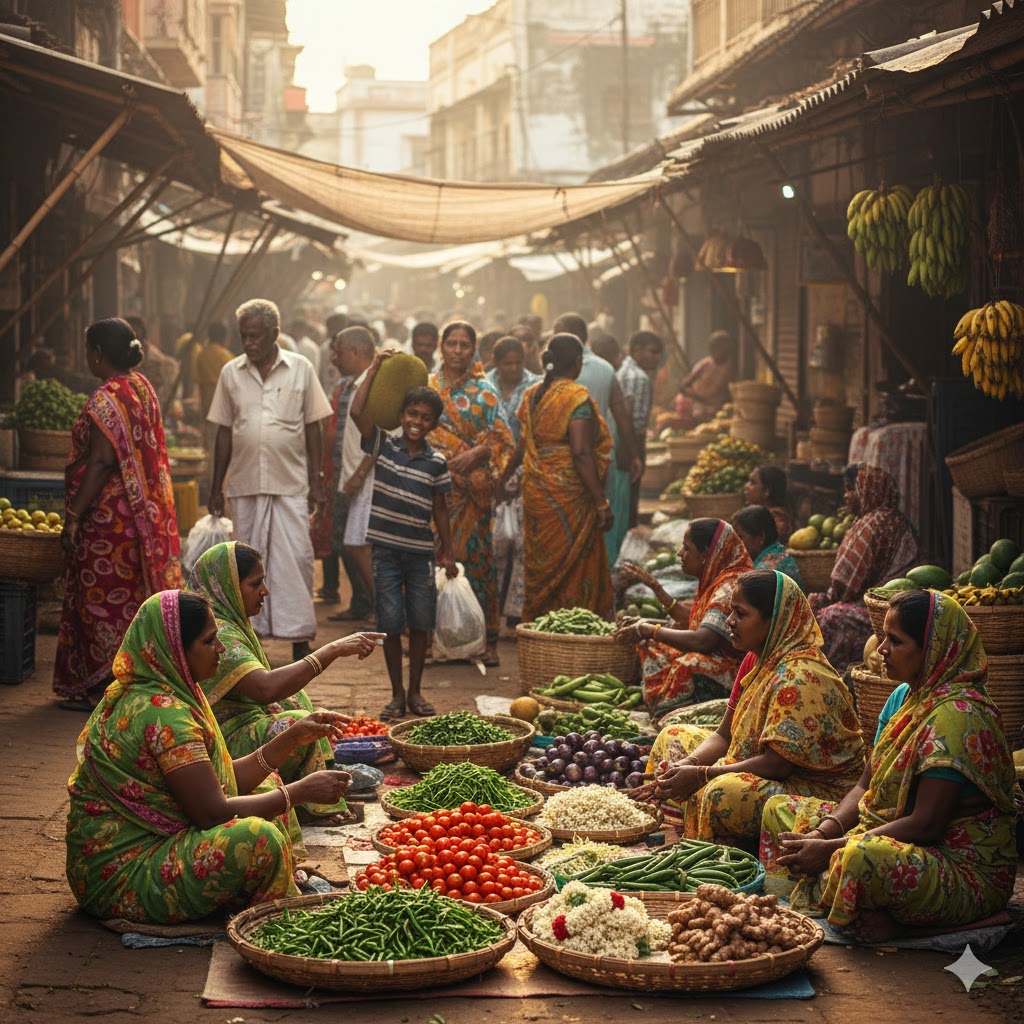
Krishna District has one of the most vibrant and diversified economies in Andhra Pradesh, driven by fertile agricultural lands, a strong aquaculture base, and rapidly expanding commercial sectors. The district’s rich delta region, nourished by the Krishna River, supports high-yielding crops and year-round farming, making it a major contributor to the state’s food production.
Agriculture
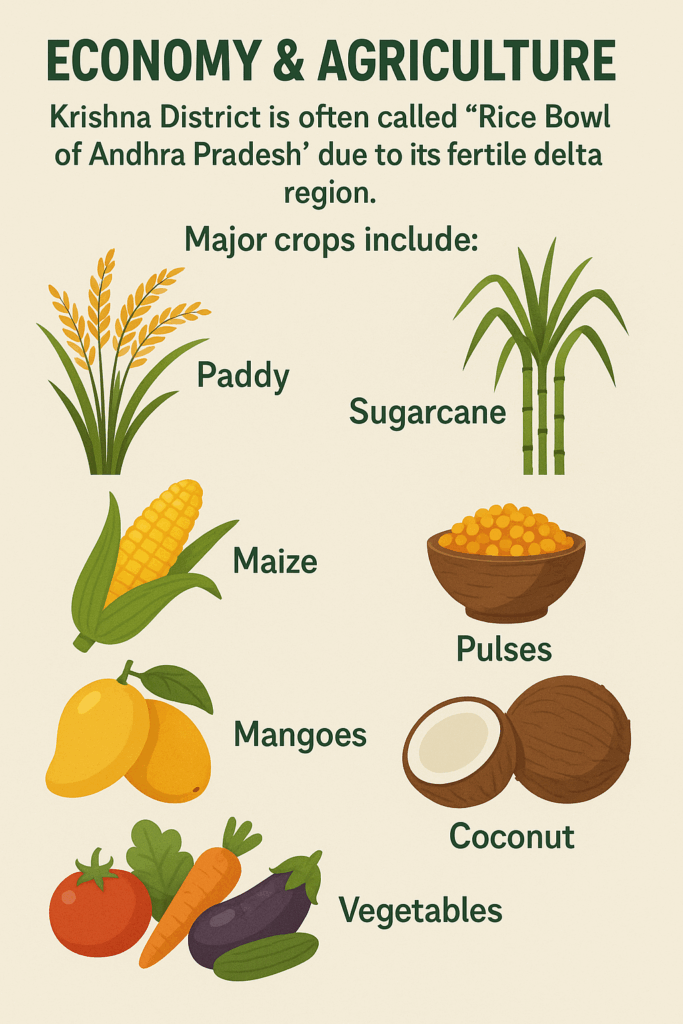
Agriculture is the backbone of the district’s economy. The Krishna River delta provides fertile alluvial soil and an extensive canal network that supports large-scale cultivation. Major crops include:
Paddy (primary crop)
Sugarcane
Maize
Pulses and oilseeds
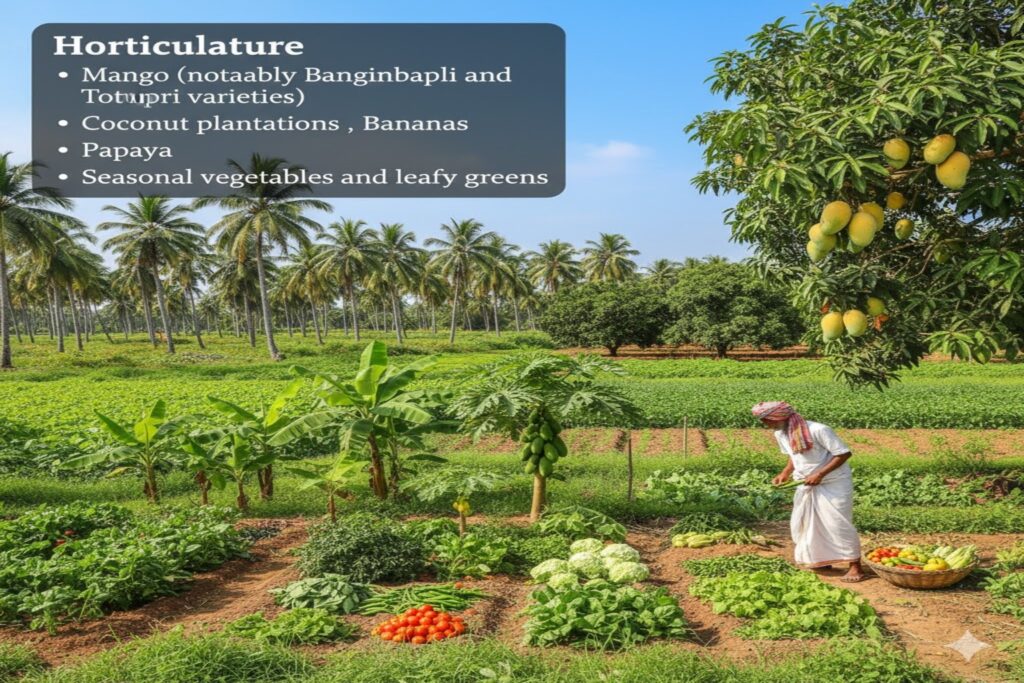
Horticulture crops such as mango, coconut, banana, and vegetables
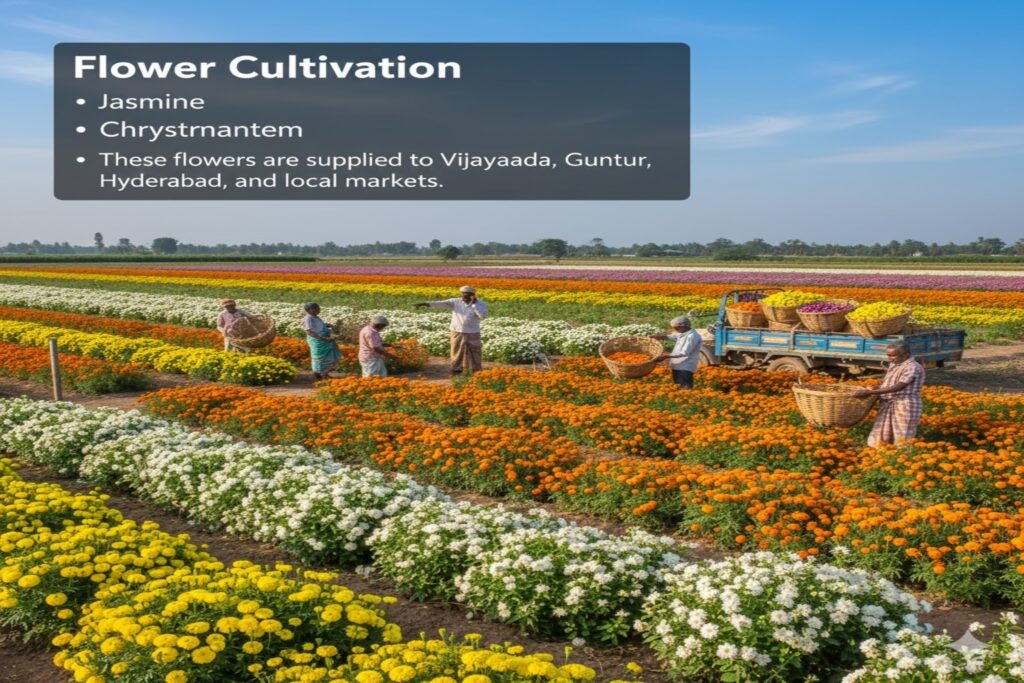
The district is also known for flower cultivation and large-scale horticulture, which supply both local and regional markets.
Economic Strengths of Krishna District
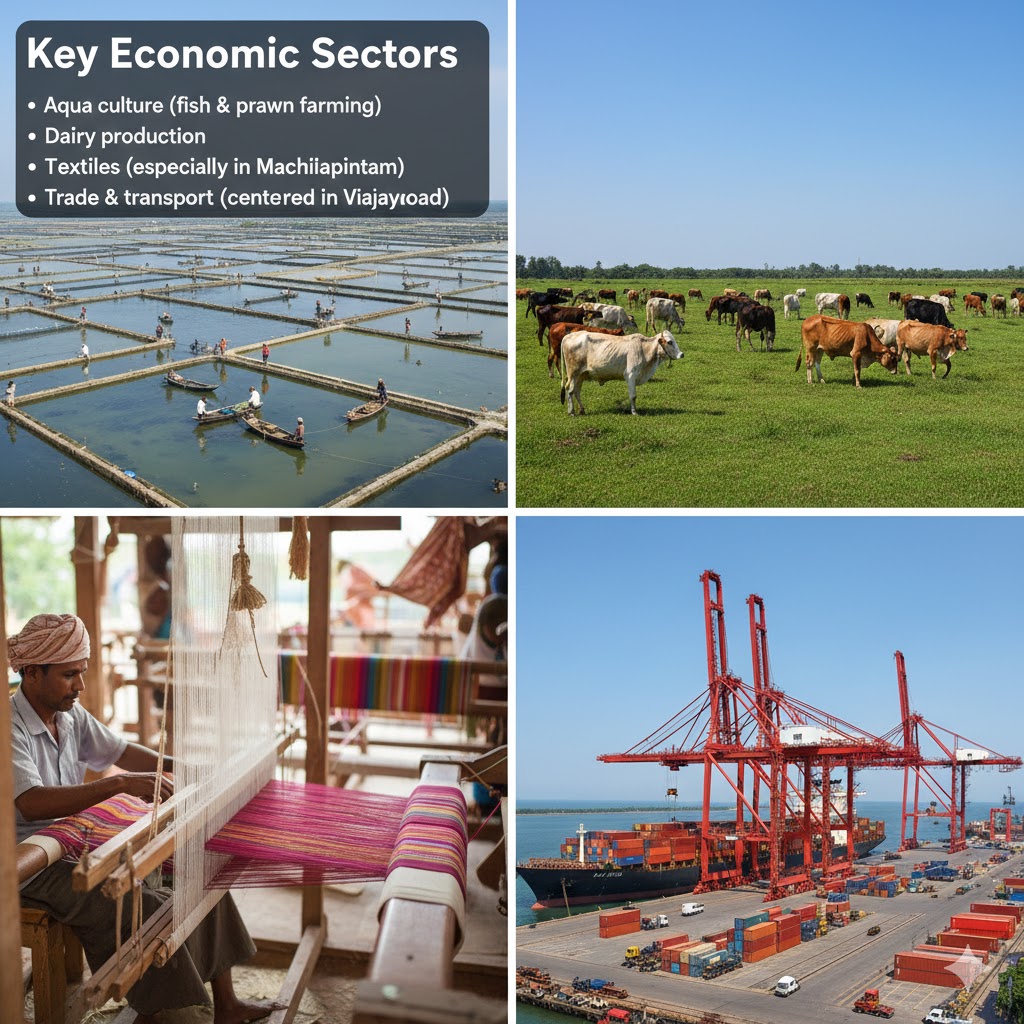
1. Aquaculture (Fish & Prawn Farming) The district is one of Andhra Pradesh’s leading hubs for aquaculture. With vast stretches of brackish water canals and fertile coastal regions, Krishna is known for large-scale fish and prawn cultivation.
2. Dairy Production Dairy is another crucial sector, supported by cooperative societies and private dairy units. Rural households are actively involved in milk production, cattle rearing, and supplying milk to large dairy processing units.
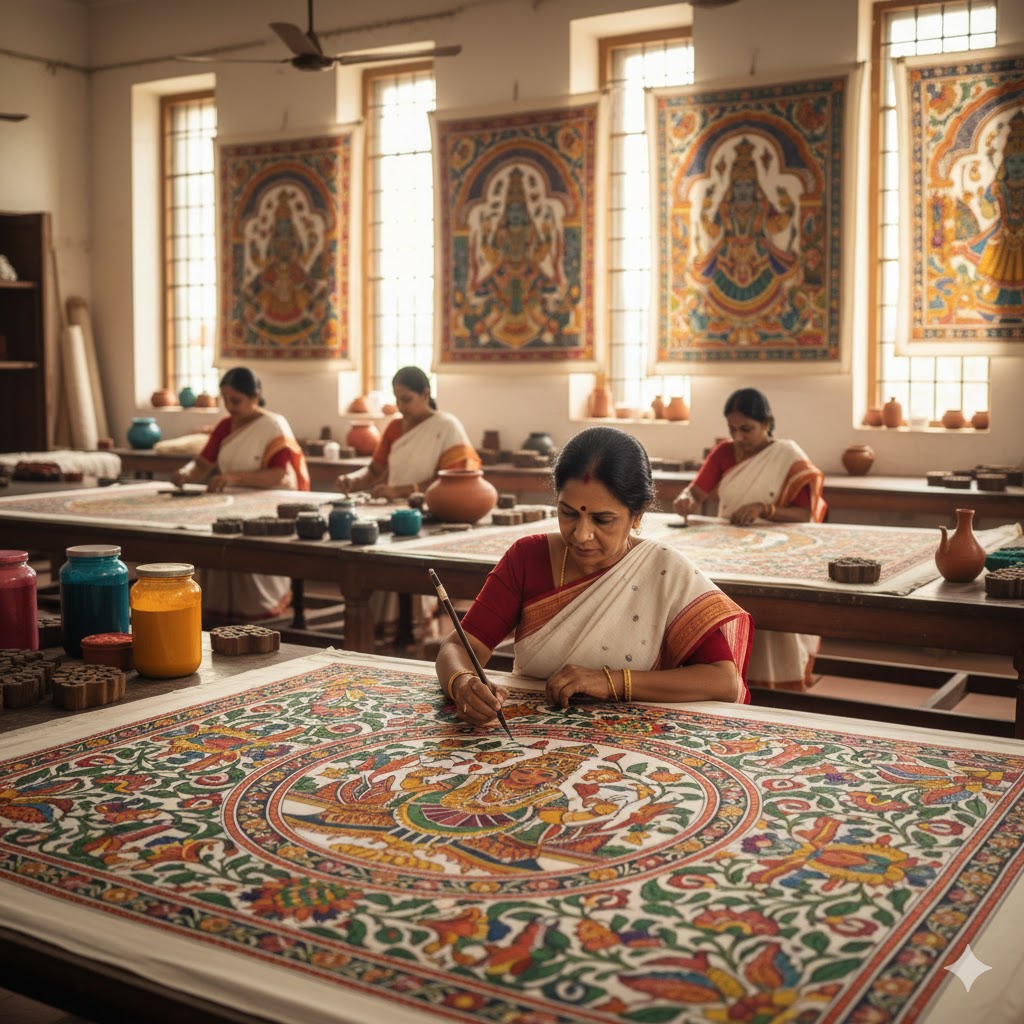
3. Textiles – Especially in Machilipatnam Machilipatnam is historically known for its Kalamkari artistry and handloom weaving traditions. Today, the town continues to thrive as a textile center, producing a wide range of fabrics—from traditional hand-made designs to modern textile products.
4. Trade & Transport (Centered in Vijayawada) Vijayawada serves as the commercial powerhouse of the district. Its strategic location, excellent road and rail connectivity, and bustling business markets make it a central hub for:
🎭 Culture & People – Krishna District
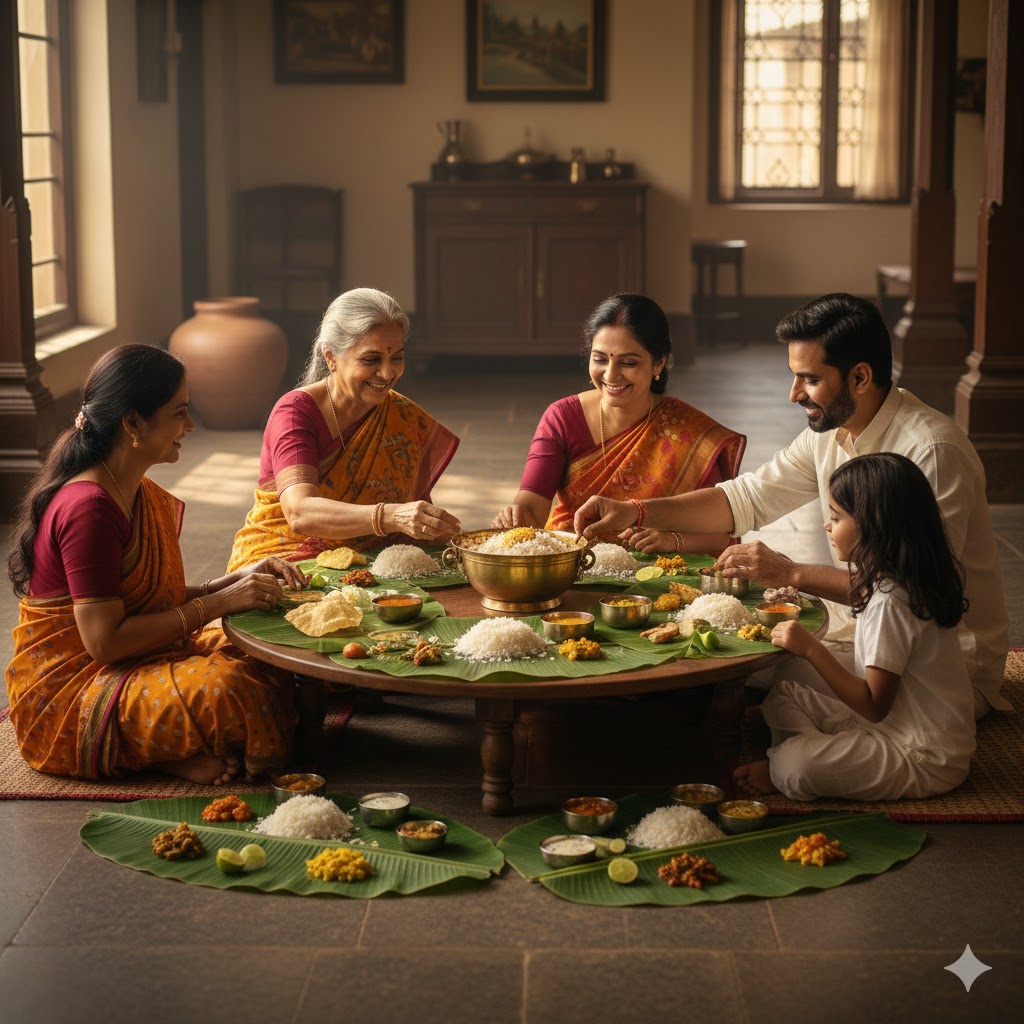
Krishna District is a vibrant cultural heartland of Andhra Pradesh, known for its rich heritage, classical artistry, spiritual depth, colorful festivals, and warm, community-centered lifestyle. The people here are deeply rooted in Telugu traditions, celebrated for their hospitality, strong family values, and artistic excellence. The district is globally recognized as the birthplace of Kuchipudi, the classical dance form famous for its graceful movements, expressive storytelling, and devotional dance-drama style. Krishna District is also home to renowned handicrafts such as Machilipatnam Kalamkari—an ancient textile art using natural dyes and hand-block printing—and Kondapalli Toys, beautifully carved wooden figurines depicting village life, mythology, and traditional customs. Folk arts like Harikatha, Burrakatha, Kolattam, and Veedhi Natakam continue to thrive across villages, reflecting the community’s love for storytelling, music, and performance. Spiritual harmony is a defining feature of the district, with iconic temples like Kanaka Durga in Vijayawada and ancient shrines across Machilipatnam and Ghantasala, contributing to a deep sense of devotion and unity among diverse faiths. Festivals such as Vijayawada Dasara, Sankranti, Ugadi, Krishna Pushkaralu, and many others are celebrated with immense enthusiasm, vibrant decorations, traditional dances,
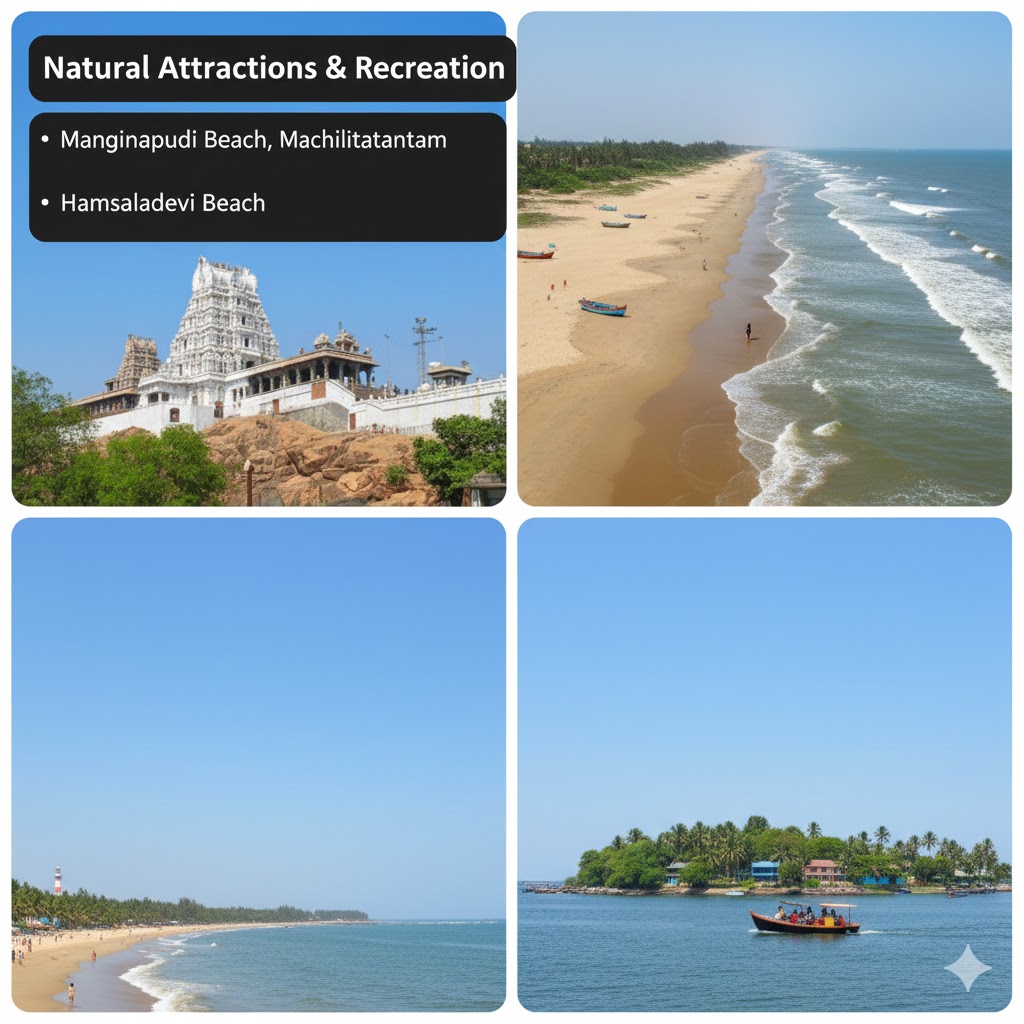
Tourism & Attractions
🚌 Connectivity & Infrastructure
🚆 Rail Connectivity
✈️ Air Connectivity – Krishna District
Key Features of Air Connectivity
Domestic Network: Regular flights operate to major Indian cities including Hyderabad, Bangalore, Chennai, Mumbai, Delhi, Visakhapatnam, and Tirupati, ensuring easy inter-state and intra-state travel.
International Reach: The airport has growing international connectivity through destinations like Singapore, Dubai, and transit routes that link passengers to global hubs.
Cargo & Export Support: Equipped with cargo handling units, the airport facilitates the export of agricultural produce, marine products, textiles, and industrial goods from Krishna District to global markets.
Modern Infrastructure: Features include an upgraded terminal, advanced navigation systems, parking facilities, lounges, and improved passenger services for a seamless travel experience.
Economic Impact: The airport boosts regional development by supporting tourism, trade, business investments, and fast accessibility to Vijayawada, Machilipatnam, and surrounding towns.
⚓ Machilipatnam Port
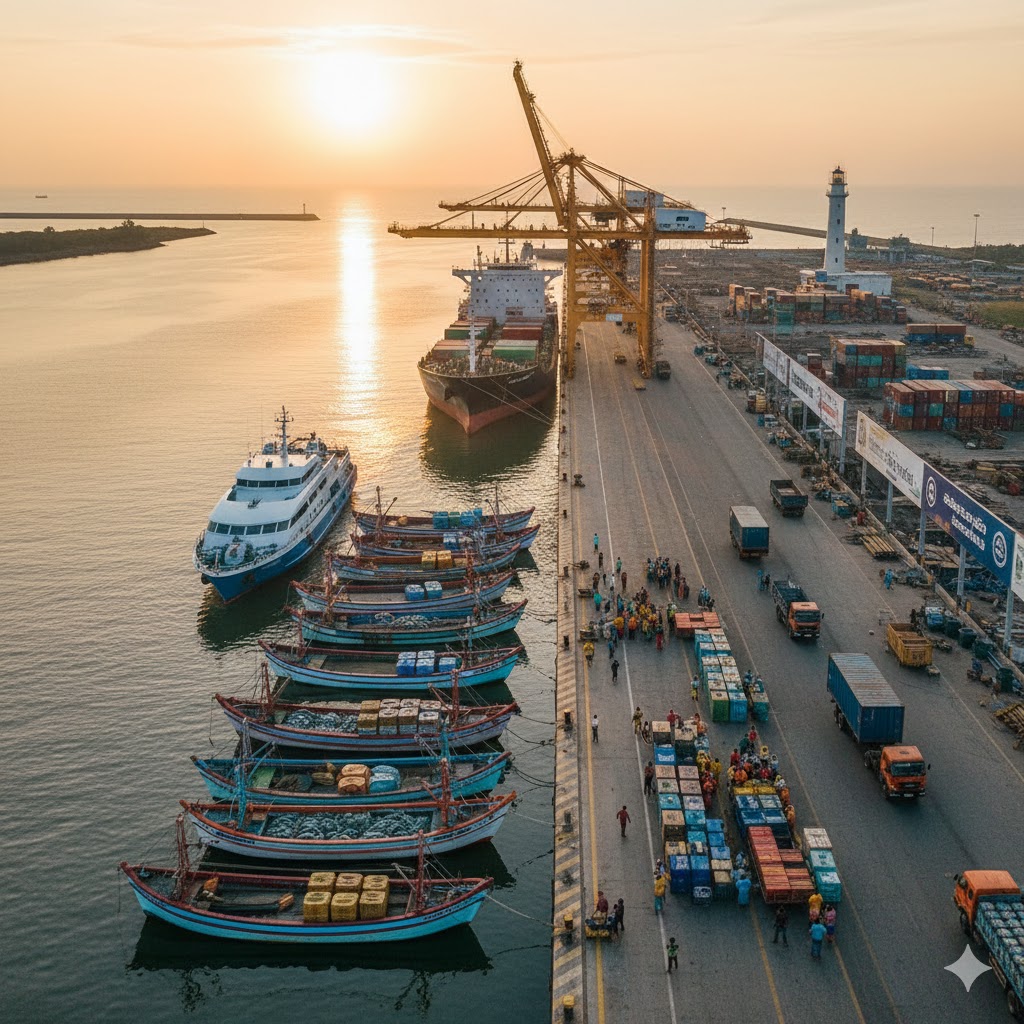
Machilipatnam Port, historically known as Masulipatnam Port, is one of the oldest and most significant coastal gateways of Andhra Pradesh. Located on the Bay of Bengal in Krishna District, the port has been an important center for maritime trade since ancient times, connecting the region to Southeast Asia, the Middle East, and European trading networks. Today, the port supports the district’s economy by handling marine products, salt, textiles, agricultural goods, and export cargo such as Kalamkari textiles and aquaculture produce. Ongoing modernization plans—such as new jetties, cargo-handling facilities, channel deepening, and improved road connectivity—aim to upgrade Machilipatnam into a more efficient commercial port. It also plays a vital role in the livelihoods of local fishing communities by offering safe landing areas and supporting seafood processing units. With its strategic location and expansion projects, Machilipatnam Port continues to strengthen Krishna District’s trade, industry, and coastal economy.
Situated along the Bay of Bengal, the port provides easy access to:
Southeast Asian routes
Coastal shipping corridors
Inland markets of Krishna, Guntur, NTR District, and West Godavari